
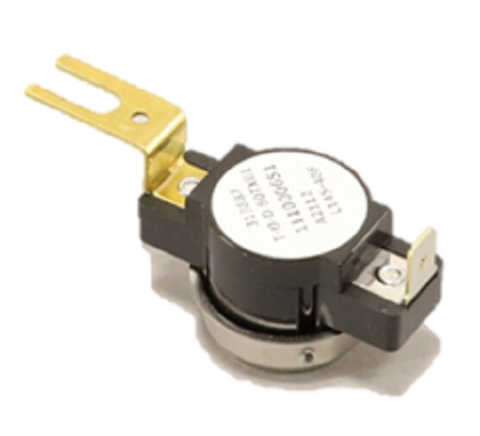
Armstrong Furnace R101082-01 Limit Switch
The Armstrong Furnace R101082-01 Limit Switch is a critical safety component engineered to monitor heat exchanger temperatures and prevent thermal overloading. This OEM replacement limit switch features a fixed set point of L145-40F, meaning it opens the circuit at 145 degrees Fahrenheit and automatically resets once the temperature drops by a 40-degree differential. It is the direct factory-authorized replacement for part number R110000269. Precision-calibrated for Armstrong Air and AirEase furnaces, this HVAC high-limit sensor ensures the blower assembly maintains adequate airflow and prevents hazardous operating conditions. Contractors should verify the temperature rating on the existing switch's faceplate to ensure a match. This SPST (Single Pole Single Throw) switch provides reliable furnace overheating protection and restores system sequence of operation in high-efficiency gas furnaces.
Key Benefits:- Direct OEM replacement limit switch for R110000269, ensuring exact physical and electrical fit.
- Fixed L145-40F temperature rating provides precise safety cutoff for heat exchanger protection.
- Compatible with a wide range of Armstrong Air furnace models and AirEase HVAC systems.
- Automatic reset functionality minimizes system downtime once safe temperatures are restored.
- Constructed for high-cycle reliability in residential heating applications.
How do I know if my R101082-01 limit switch is faulty?
If the furnace burner shuts down prematurely or the blower runs continuously while the diagnostic LED indicates an open limit string, the switch may be tripped or failed. Use a multimeter to check for continuity during a call for heat.
Is the R101082-01 compatible with other furnace brands?
While primarily used in Allied Air brands like Armstrong and AirEase, many L145-40F limit switches share specifications. However, bracket orientation and terminal size vary; always verify the OEM part number before installation.
What causes this high limit switch to trip repeatedly?
Frequent tripping is usually caused by restricted airflow, such as a clogged air filter, undersized ductwork, a failing indoor blower motor, or a dirty evaporator coil.
Disclaimer: While we strive for 100% accuracy, product data and specifications are subject to change. Please contact our team to confirm compatibility or technical details before purchasing.
QUESTIONS & ANSWERS
Have a Question?
Be the first to ask a question about this.