
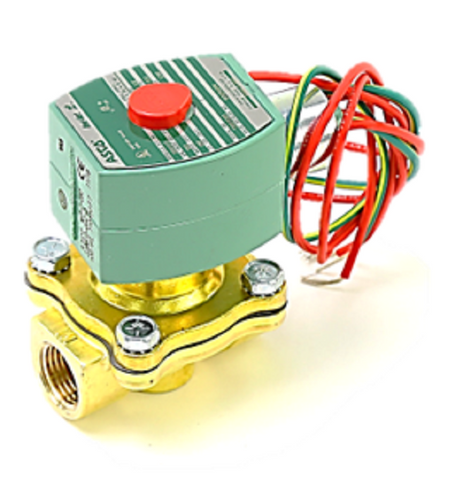
ASCO 8210G94 Solenoid Valve
The ASCO 8210G94 Solenoid Valve is a rugged, 2-way normally closed pilot operated solenoid valve engineered for high-flow industrial applications. Built with a heavy-duty brass body solenoid valve construction and NBR seals, this 1/2" NPT unit is designed for reliable on/off control of air, inert gas, and water. Operating on 120Vac, it features a 4 Cv flow coefficient and handles a maximum operating pressure differential of 150 PSI. The integrated NEMA 4X enclosure provides superior protection against corrosion and environmental ingress, making it suitable for demanding washdown and outdoor environments. As a cornerstone of the ASCO 210 Series, the 8210G94 utilizes a diaphragm-style internal pilot to manage high flow rates with minimal internal leakage. This industrial fluid control valve is a standard choice for contractors looking for durable, general-service shutoff components in HVACR and commercial water systems.
Key Benefits:- High Flow Performance: Features a 4 Cv rating to ensure maximum throughput in 1/2 inch piping systems.
- Industrial Durability: Robust brass body and NBR (Buna-N) seals provide long-term reliability for general service media.
- Environmental Protection: The NEMA 4X watertight and corrosion-resistant enclosure allows for safe installation in harsh conditions.
- Standardized Compatibility: Dual-rated for 110/120V 50/60Hz, ensuring seamless integration into standard electrical panels.
- Pilot-Operated Maintenance: Designed for easy access to internal diaphragms and coils for streamlined field service.
What is the minimum pressure required for the ASCO 8210G94 to operate?
As a pilot-operated valve, the 8210G94 typically requires a minimum operating pressure differential (usually 5 PSI) to lift the diaphragm; it will not function properly in zero-pressure or gravity-feed systems.
Can this valve be used with light oils?
While optimized for air and water service, the NBR seals are generally compatible with light oils, though you should verify fluid viscosity to ensure it does not exceed the mechanical limits of the internal pilot.
How do I troubleshoot a buzzing noise in the solenoid?
Buzzing often indicates a voltage mismatch, a loose coil, or debris in the core tube. Ensure the supply is at least 85% of the nameplate rating and inspect the plunger for mechanical obstructions.
Disclaimer: While we strive for 100% accuracy, product data and specifications are subject to change. Please contact our team to confirm compatibility or technical details before purchasing.
QUESTIONS & ANSWERS
Have a Question?
Be the first to ask a question about this.