
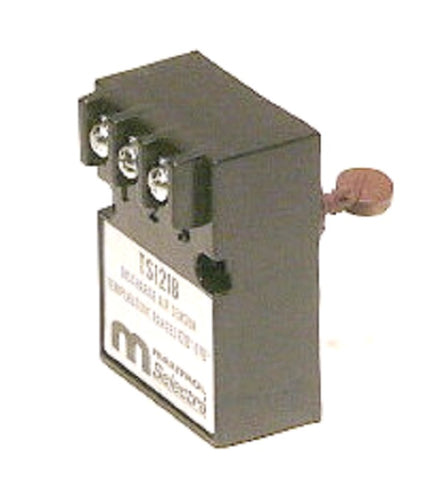
Maxitrol TS121B Temperature Sensor
The Maxitrol TS121B is a high-precision discharge air temperature sensor engineered for gas-fired heating systems requiring elevated setpoints between 120°F and 170°F. Designed for seamless integration with Maxitrol Series 20/30 and 21/31 electronic modulation systems, this thermistor-based component provides the instantaneous feedback necessary for the Selectra modulator-regulator valves to maintain stable discharge temperatures. Unlike mechanical alternatives, the TS121B communicates directly with the system amplifier to facilitate continual gas flow adjustment, ensuring consistent performance in make-up air units and industrial duct furnaces. For accurate sensing, this HVAC temperature sensor must be installed within a dedicated mixing tube to protect the element while allowing representative airflow sampling. This ensures the Maxitrol modulation system reacts to true air discharge conditions rather than localized heat spikes, preventing short cycling and improving fuel efficiency across the heating circuit.
Key Benefits- Precise Modulation: Provides the critical feedback loop for Maxitrol Selectra systems to achieve near-instantaneous gas flow adjustments.
- High-Temperature Range: Specifically calibrated for 120°F to 170°F industrial and commercial applications.
- System Compatibility: Direct drop-in replacement for use with Series 20, 21, 30, and 31 control configurations.
- Durability: Rugged construction designed to withstand steady-state high-temperature discharge environments in gas-fired furnaces.
What is the resistance value of the TS121B?
The TS121B typically operates on a negative temperature coefficient (NTC) curve, with a base resistance of approximately 4500 ohms at 77°F, allowing the amplifier to detect minute temperature shifts.
Can I install this sensor without a mixing tube?
It is not recommended. Using the Maxitrol TS121B without a mixing tube can lead to inaccurate readings and premature sensor failure due to direct exposure to turbulent air and radiant heat.
How do I troubleshoot a suspected sensor failure?
Technicians can verify operation by checking the DC voltage at the amplifier terminals or by using a 4500-ohm test resistor to simulate a 77°F load, confirming if the modulation valve responds correctly.
Disclaimer: While we strive for 100% accuracy, product data and specifications are subject to change. Please contact our team to confirm compatibility or technical details before purchasing.
QUESTIONS & ANSWERS
Have a Question?
Be the first to ask a question about this.