
HVAC Refrigeration Guide
Gas Furnace Ignition Lockouts: Single-Stage vs. Staged Systems

- Tags: condensing furnace, flame sensor, furnace repair, gas furnace, heating systems, hot surface igniter, HVAC diagnostics, ignition lockout
Crankcase Heater Failure: Diagnosing Migration, Flooding & Slugging
- Tags: A2L refrigerants, compressor diagnosis, compressor flooding, crankcase heater, HVACR troubleshooting, R-32, R-454B, refrigerant migration, refrigeration service, slugging
How to Read Superheat and Subcooling Together
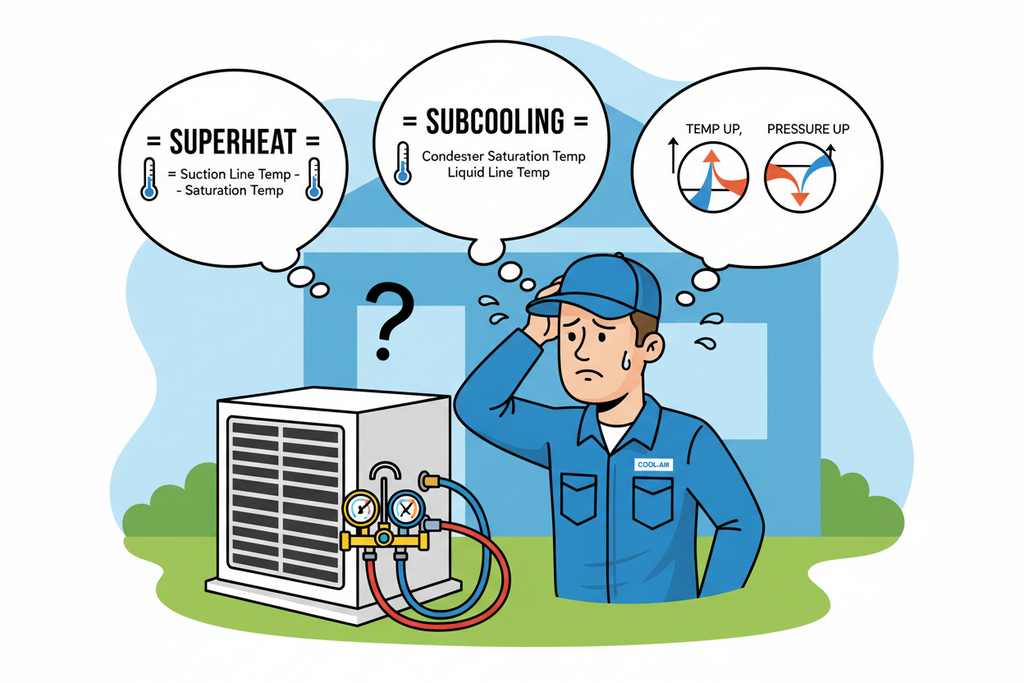
- Tags: A2L refrigerants, fixed orifice, HVAC diagnostics, metering device, R-454B, refrigerant charging, refrigeration, subcooling, superheat, TXV
Aerco Boiler Controls: Flow Sensors, Actuators & Diagnostics
- Tags: Actuator, Aerco, Benchmark Series, Boiler Controls, Commercial Boiler, Control Board, Flow Sensor, HVAC Diagnostics, Innovation Series, OEM Parts
AAON RTU No Heat? Diagnose Electric Heat, Inducer & Controller
- Tags: AAON, Controller Diagnostics, Draft Inducer, Electric Heat, Heating Element, HVAC Troubleshooting, OEM Parts, Pressure Switch, Rooftop Unit, RTU